Specialty Service
Post Construction Cleaning Portland
Your GC just called. The space needs to be move-in ready, but there's drywall dust on every surface and adhesive on the windows. The HVAC vents are packed with sawdust. A regular cleaning crew won't cut it here. You need a Portland post construction cleaning crew that's actually done it before.
Why Post-Construction Cleaning Is a Specialized Job
Construction dust is not regular dust. Drywall compound turns into ultra-fine powder that gets into places you wouldn't think to check: inside cabinets, behind outlet covers, deep in the ductwork. Paint splatters bond to new flooring. Adhesive residue from manufacturer labels won't come off with all-purpose cleaner. Grout haze films over tile that was installed yesterday. And protective window film? Leaves its own residue if you peel it off wrong.
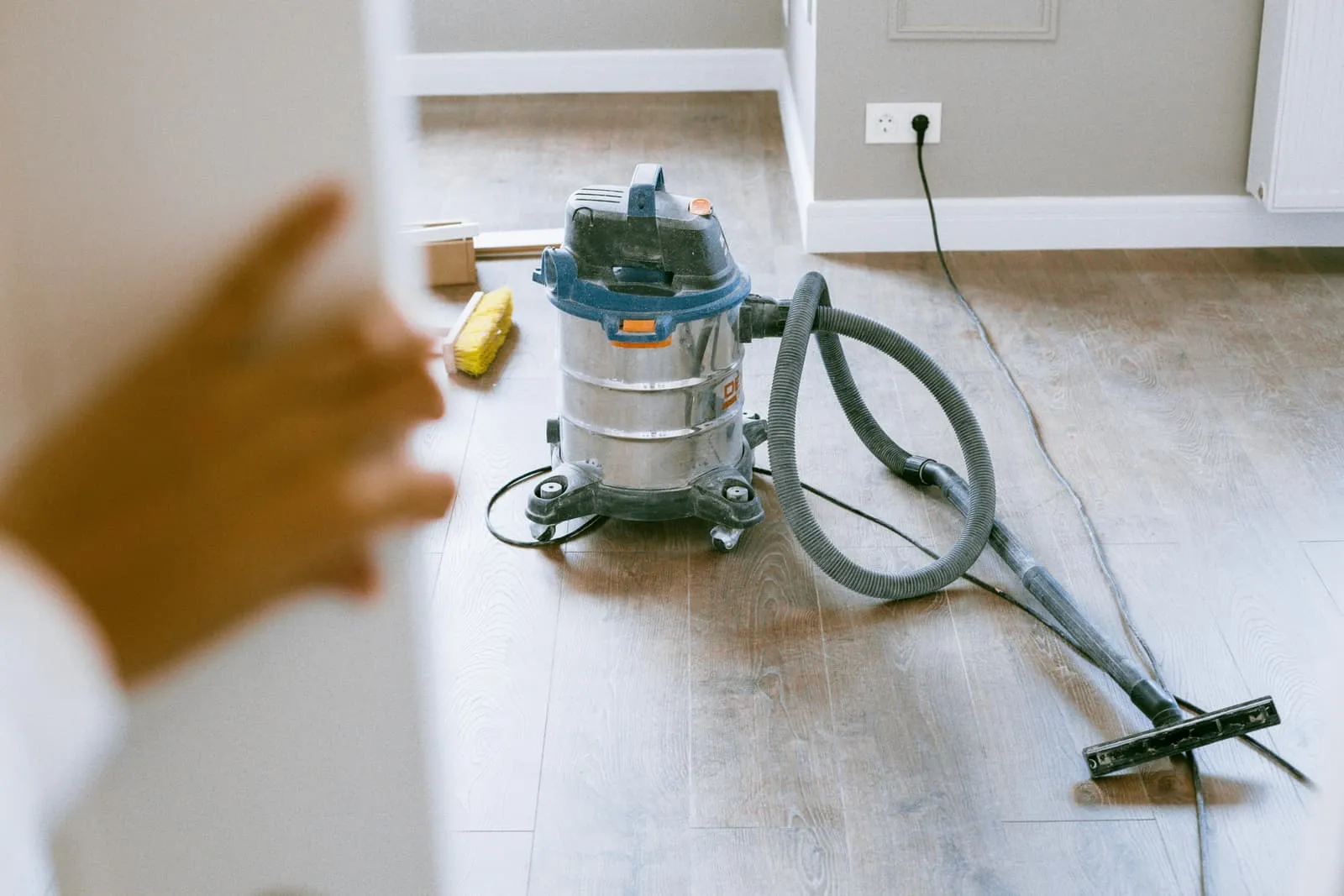
Your regular janitorial crew isn't set up for this. Post-construction cleaning takes HEPA-filtered vacuums, detail scrapers, the right solvents for each type of residue, and a room-by-room system. Otherwise you're just pushing dust around.
The Expensive Shortcut
We've seen this go wrong enough times to be blunt about it. Skip the proper post-construction clean, or rush it with an unequipped crew, and construction dust will circulate through the HVAC system for months. It coats new furniture. Tenants complain. Filters burn out faster. People get headaches. One thorough clean now costs a fraction of what you'll spend fixing those problems later.
The 2-Phase Process: Rough Clean and Final Clean
Post-construction cleaning is not one visit. It's two phases, and they happen at different points in the construction schedule. Time them wrong and the next trade through the door undoes your clean.
Rough Clean
When: After drywall and mechanicals, before paint and flooring
This clears the site so finish trades can work in a clean environment. It also prevents drywall dust from getting sealed under paint or embedded in new flooring.
- ✓ Remove all debris, drywall scraps, packaging, and leftover materials
- ✓ Sweep and vacuum every floor surface
- ✓ Dust all horizontal surfaces, ledges, and sills
- ✓ Clean exterior glass on all windows
- ✓ Wipe down rough-installed fixtures and appliances
- ✓ Clear visible debris from HVAC openings
Final Clean
When: After all finishes are installed and every trade has left the site
This is the pass that turns a construction site into a place someone would actually want to work in. Nothing gets skipped.
- ✓ Remove all stickers, labels, manufacturer film, and protective coverings
- ✓ Detail clean every window: glass, tracks, sills, and frames
- ✓ Clean all light fixtures, switch plates, outlet covers, and thermostats
- ✓ Wipe down every baseboard, piece of trim, and door frame
- ✓ Deep clean kitchens and bathrooms including inside all cabinets
- ✓ Vacuum and mop all finished floors
- ✓ Clean every HVAC vent, return grille, and accessible duct opening
What actually happens between rough and final: the touch-up phase
Most post-construction cleaning marketing talks about two phases: rough and final. In practice, large commercial projects need a third pass, and sometimes a fourth. The GCs who've worked with us long enough know to budget for them.
Touch-up cleans (between trades)
Touch-up cleans happen mid-finish, usually after paint but before flooring goes down. Painters track drips. Floor crews need a swept substrate. Tile installers need their workspace clean before they set the first row. A 60-minute touch-up between trades prevents the next trade from working on dirt and prevents the final clean from doubling in scope.
OSHA-compliant debris handling
OSHA-compliant debris handling is the other thing nobody puts on a website. We're not a hazardous materials abatement company. If your site has lead paint, asbestos, mold above incidental levels, or sharps, you need a licensed abatement crew before we set foot on the project. But for everything else (general construction debris, drywall scrap, packaging, paint cans without residue, scrap wood, broken fluorescent tube fragments at incidental levels), we follow OSHA 1910 housekeeping standards: bagged debris in compliant containers, sharps separated and contained, dust controls during sweep-up to prevent silica exposure to occupants of adjacent spaces. Our crews carry HEPA-filtered ProTeam backpack vacuums on every job, which matters when the dust contains crystalline silica from drywall compound and concrete.
Punch-out re-clean
The punch-out re-clean is the pass after the GC's punch list is closed. Touch-up paint dries. The electrician finishes the cover plate. The plumber returns to swap a fixture. Each of those creates dust or debris in an area we already cleaned. Most projects need a 2 to 4 hour re-clean of the affected zones before the tenant inspection. We price this separately on the original quote so there's no surprise.
Dust removal protocols
Dust removal protocols vary by project type. New construction with sealed HVAC ducts during build needs a single Final pass. Renovations where vents stayed open need a vent-by-vent wipe and a HEPA pass through every accessible duct opening. Commercial kitchens and medical buildings need a third pass on the suspended ceiling tiles because dust falls back down for 48 hours after the initial clean.
Before We Arrive: How to Get the Best Result
How good your final clean turns out depends a lot on what's done before we get there. This is what we tell every GC and project manager.
For the Best Final Clean
- ✓ All construction 100% complete: paint dry, flooring down, fixtures mounted
- ✓ All trades off-site with no return visits pending
- ✓ Construction tools, materials, and equipment removed
- ✓ Utilities on: running water, working lights, HVAC powered
- ✓ Building access arranged: badges, keys, or escort schedule confirmed
What Slows Things Down
- × Trades returning after final clean starts. Even one electrician installing a cover plate creates dust
- × Punch list items incomplete. Paint touch-ups leave overspray on cleaned surfaces
- × No running water. We can't clean without it
- × Debris still on-site. Final clean is not debris removal, that's the rough clean
- × Access delays. Waiting for badges or escorts eats into productive cleaning hours
Room-by-Room: What Gets Cleaned
Kitchens aren't the same job as open office space. Here's what gets done in each area.
Every Room
✓ Construction dust removed from ceilings, walls, and corners
✓ All light switches, outlets, and thermostats wiped clean
✓ Light fixtures cleaned and protective coverings removed
✓ Paint splatters and adhesive residue removed from surfaces
✓ Window glass, sills, tracks, and frames detail cleaned
✓ Baseboards, trim, crown molding wiped down
✓ Doors, door frames, and hardware cleaned
✓ Floors vacuumed (HEPA) and mopped
Kitchens and Break Rooms
✓ Inside and outside of all cabinets and drawers
✓ Countertops cleaned, adhesive residue removed
✓ Appliances cleaned inside and out, polished
✓ Sinks, faucets, and drains detail cleaned
✓ Backsplash cleaned, grout haze removed
✓ Stainless steel surfaces polished streak-free
Bathrooms and Restrooms
✓ Toilets, urinals, and fixtures cleaned and disinfected
✓ Showers, tubs, and tile detail cleaned, grout haze removed
✓ Mirrors polished, protective film removed
✓ Sinks, faucets, and drains detailed
✓ All hardware and accessories wiped down
✓ Inside cabinets and vanities cleaned
Who Hires Us
If you're the person who has to get a construction project to the finish line and need the space clean before anyone moves in, we already know how your day works.
General Contractors
You need a cleaning crew that shows up on time, doesn't need hand-holding, and delivers a result that passes inspection. We coordinate directly with your PM and work around your schedule, including evenings and weekends when deadlines get tight.
Property Managers
Tenant improvement projects, unit turnovers, common area renovations. You're balancing construction timelines with lease start dates. We understand that pressure and size our crew to meet your deadline, not the other way around.
Business Owners
You just spent real money renovating and you want the space to look like it. We make sure there's no trace of construction when your staff and customers walk in.
Types of Post-Construction Projects We Handle
Different project types create different messes. A ground-up build has months of accumulated dust in the ductwork. A TI project has adhesive and drywall compound in a space that was occupied two weeks ago. We adjust our approach to what the project actually needs.
New Commercial Construction
Office buildings, retail, medical, restaurants, mixed-use. Full rough clean and final clean. The heaviest level of post-construction work.
Tenant Improvements
Office build-outs, retail reconfigs, suite renovations. Usually a final clean only, on a tight timeline tied to a lease start date.
Renovations and Remodels
Kitchen upgrades, bathroom remodels, flooring replacement, interior refreshes. Scope varies. Sometimes one room, sometimes an entire floor.
Multi-Family Housing
Apartment buildings, condos, mixed-use residential. Unit-by-unit cleaning with common area attention. We scale crew size to match your turnover schedule.
Post-construction cleaning across Portland metro
We work jobs across the entire Portland metro area, from the Tigard Triangle expansion projects to Vancouver, WA mixed-use builds. Each city has its own construction rhythm, its own GCs we coordinate with regularly, and its own building stock that affects how a final clean comes together. The crew, the trucks, and the equipment travel. What changes is the access logistics, the dust load, and the timeline pressure.
Post-construction cleaning in Portland
Portland's downtown core, Pearl District, Lloyd, Central Eastside, and South Waterfront all have active TI work. Conversions of older warehouse stock in the Pearl and inner eastside generate a different debris profile than ground-up new construction. Old plaster dust mixes with new drywall, and original fir floors bleed sawdust during refinishing. We coordinate with the major Portland GCs working these districts and handle the building access requirements: badges, freight elevator scheduling, after-hours-only work in occupied multi-tenant towers. Most Portland TI projects run 3,000 to 15,000 sq ft and need a final clean only. The GCs in this market typically keep the rough phase clean enough to skip Phase 1.
Post-construction cleaning in Beaverton
Beaverton has the heaviest active commercial construction in the metro outside Portland proper. South Cooper Mountain alone has 3,000+ housing units in various stages of build. The Sunset Highway tech corridor (Tektronix area, Biamp, Digimarc, Planar) has constant TI churn as tech tenants reconfigure space. Beaverton GCs also handle a steady pipeline of suburban office park rebuilds along Murray Scholls and Scholls Ferry. Drywall dust loads in these projects tend to be high. Most Beaverton builds use blown-in insulation that creates fine particulate the standard janitorial vacuum recirculates straight back into the air. We bring HEPA-filtered ProTeam backpack vacuums and run extra HVAC vent passes on every Beaverton final clean.
Post-construction cleaning in Lake Oswego
Lake Oswego construction is mostly high-finish: law firms, wealth management offices, medical practices, and luxury retail. The buildings are smaller (typically under 8,000 sq ft) but the finish quality is uncompromising. These clients notice grout haze, smudged hardware, and residue on premium tile that wouldn't get flagged on a generic office build. Most jobs are full TIs or renovations, not new construction. We schedule Lake Oswego work tight against the certificate-of-occupancy deadline because the trades involved (high-end tile, custom millwork, specialty plumbing) tend to come back for touch-ups even after the GC says they're done. Plan for two final-clean passes if the project involves natural stone or imported finishes.
Post-construction cleaning in Tigard
Tigard's construction is concentrated in the Tigard Triangle, the redevelopment zone bounded by I-5, Highway 217, and 99W. New mixed-use, retail expansion, restaurant build-outs, and dental and medical offices around Bull Mountain and along 99W are the regular project types. We've been the cleaning partner for several Tigard Triangle GCs over the last three years and ranked pos 1.4 historically for "post construction cleaning tigard" before our URL restructure. The city's construction is mid-scale (5,000 to 25,000 sq ft) and timeline-driven by lease starts. We typically run a rough clean before paint and a final clean once the trades are off site. The Tigard market expects both phases. Full local detail on the dedicated post-construction cleaning Tigard → page.
Post-construction cleaning in Hillsboro
Hillsboro construction is dominated by Silicon Forest tech: Intel-adjacent suppliers, semiconductor support firms, and medical device companies in the Tanasbourne and Orenco areas. These projects often have cleanroom-adjacent spaces that require particle-control cleaning protocols (low-lint microfiber, HEPA filtration, no off-gassing chemicals). Standard post-construction cleaning will fail QC on these jobs. We adjust our process for tech tenant TIs: extra dust passes through the HVAC, low-VOC products only, and documented cleaning logs that the tenant's facilities team can use during cleanroom commissioning. Hillsboro project managers value the documentation as much as the clean itself.
Post-construction cleaning in Vancouver, WA
Vancouver, WA is a separate market from Oregon: different state regulations (Washington L&I instead of Oregon OSHA), different unemployment insurance rules for crews, and cross-river logistics that add about 30 minutes of travel each way. We handle Vancouver post-construction work regularly. Pre-Feb 2026 we ranked pos 29 historically for "post construction cleaning vancouver wa" with 686 impressions. The active project corridors are downtown Vancouver around the Vancouver Waterfront development, the I-205 corridor in east Vancouver, and Salmon Creek for medical and retail. Vancouver GCs tend to want a single Final Clean on a tight 48 to 72 hour window before tenant move-in.
Post-construction cleaning in Gresham
Gresham construction is mostly small commercial: independent professional offices, retail along Powell, and renovations of older industrial stock along I-84. Project sizes are typically under 5,000 sq ft and the GCs are smaller regional outfits, not the big metro contractors. The rough clean phase is often skipped because the project size doesn't warrant it. We focus the Gresham work on a thorough single-pass final clean. Travel time from Portland is 25 to 35 minutes depending on traffic on I-84. We schedule Gresham jobs in clusters when possible to keep mobilization efficient.
Post-construction cleaning in Happy Valley
Happy Valley's commercial construction is centered on the Sunnyside Road corridor and the Clackamas Town Center retail expansion. Most projects are new-build retail, restaurants, and small professional offices serving the residential growth in the surrounding hills. The buildings are typically 2,000 to 8,000 sq ft. Drywall dust loads are normal, but parking lot dirt and clay subsoil tracked in by trades adds an entry-area cleaning challenge that Portland-proper jobs don't have. We bring extra entryway floor care equipment for Happy Valley jobs.
What Affects the Scope of a Post-Construction Clean
No two projects quote the same. These are the factors that actually move the number.
Square footage
The most obvious factor. A 3,000 sq ft office suite is a different job than a 20,000 sq ft new build. We quote based on actual area, not an estimate.
Phases needed
Rough clean only, final clean only, or both. Most new construction needs both. Many TI projects and renovations only need a final clean.
Dust and debris level
If the GC masked the vents and covered the floors during drywall, the final clean goes much faster. If nobody did that, expect us to spend a lot more time in the ductwork. Protective measures during construction directly affect your final clean bill.
Room mix
Kitchens and bathrooms take longer than open office space. A medical facility with multiple exam rooms is different from a retail shell. The type of rooms matters as much as the total square footage.
Timeline pressure
If you have a hard occupancy deadline and you're giving us 48 hours' notice, we can make it work. We just bring more people. Tight timelines don't scare us, they just change crew size.
From the Field
Every job teaches you something. Here are a few that stuck with us.
The TI project with a Monday move-in
Property manager calls us Wednesday. 12,000 sq ft TI in Beaverton, drywall dust everywhere, furniture delivery Monday morning. The GC was still on punch list items Thursday. We walked the space Friday afternoon, brought four people Saturday, and basically lived there through the weekend. Sunday night we locked up. Monday the tenant moved in. They had no idea the place was a construction zone 72 hours before.
The renovation where nobody masked the vents
Contractor tells us it's a "light final clean." 6,000 sq ft office renovation in Southeast Portland. We get there and every single HVAC register is caked with drywall dust. Nobody masked anything during demo. What was supposed to be one day turned into two because we had to pull every vent cover and clean inside each duct opening by hand. Not what we quoted for, but we weren't going to leave it. That contractor called us back for his next three projects.
The multi-unit turnover under the rain
Eight units in Tigard, all renovated at once. New flooring, paint, fixtures. Problem was it was November and Portland was doing its thing. Every unit had moisture tracking in from the entries and condensation on the windows all morning. We learned fast: start in the back rooms where it's dry, save the entries for last, don't touch windows until afternoon when the fog burns off. Took us a day longer than a summer job would have, but all eight passed walk-through first try.
Post-Construction Cleaning in Portland's Climate
Portland gets 150+ days of rain a year. If you've only done post-construction work in drier climates, some of this won't be obvious.
Moisture and Timing
Construction sites in Portland track moisture year-round. If you clean a window at 8 AM in January while it's fogged over, you get streaks. We've learned to sequence detail work around when surfaces will actually cooperate. Windows and hard surfaces get done when the condensation clears, not on a fixed schedule.
Mold Prevention
Portland's humidity means mold can establish in a new building within weeks of construction completing. During every final clean, we inspect window frames, under-sink areas, and interior corners for early moisture accumulation. Catching it at this stage prevents expensive remediation after tenants are in the space.
Entry Area Strategy
Ground-floor entries and lobbies re-soil faster than any other surface in the building because of rain tracking. We clean these areas last for that reason. And we'll tell you straight: if you don't put mats down immediately after we finish, that lobby floor won't stay clean through the first rainstorm.
Low-VOC Products
New construction spaces are already off-gassing from paint, adhesives, sealants, and flooring. We use low-VOC, green-certified cleaning products exclusively on post-construction jobs. In a sealed new building with the HVAC running, the last thing occupants need is chemical cleaner fumes layered on top of new-construction off-gassing.
Need a quote for an upcoming project? We respond within a few hours.
After the Construction Clean
Your space is clean. Keep it that way.
Commercial Cleaning
Floor care, window cleaning, and detail work for newly finished spaces. Lock in that just-installed look from day one.
Learn more →Move-Out & Turnover Cleaning
Tenant turnovers and unit-by-unit cleaning for property managers. Inspection-ready prep on tight timelines.
Learn more →Ongoing Janitorial Service
The post-construction clean gets you to move-in day. Regular janitorial keeps the space looking that way.
Learn more →Frequently Asked Questions
What is the difference between a rough clean and a final clean?
When should I schedule post-construction cleaning?
How long does post-construction cleaning take?
Do you handle both commercial and residential post-construction cleaning?
Can you clean construction dust out of HVAC systems?
What should be done before the cleaning crew arrives?
How does Portland's climate affect post-construction cleaning?
Do you work around other trades still finishing on site?
Do you handle post-construction cleaning in Beaverton, Tigard, Hillsboro, Lake Oswego, and Vancouver, WA?
What's the difference between a rough clean and what other cleaners call a 'construction clean'?
Do you carry the insurance and bonding required to work on commercial construction sites?
How do you handle dust falling from suspended ceiling tiles after the final clean?
Can you do post-construction cleaning on weekends or overnight to meet a Monday occupancy deadline?
What does post-construction cleaning cost in Portland?
Will you coordinate directly with our GC, or do we need to be the middleman?
Your Contractor Shouldn't Have to Follow Up Twice
Tell us the project, the square footage, and the deadline. We'll have a quote back to you within hours, not days.